Food Waste
Kitchen and food residues. Treated into compost or biogas through anaerobic digestion.

One-Stop Crushing & Separation Solution
As urbanization accelerates, municipal solid waste (MSW) is growing rapidly, making recycling an urgent global priority. Advanced MSW recycling not only reduces landfill pressure and environmental pollution but also transforms waste into valuable resources—recyclables, RDF/SRF fuel, and organic compost. It is a key driver of the circular economy and a sustainable, profitable investment for the future.
Kitchen and food residues. Treated into compost or biogas through anaerobic digestion.
Plastics, paper, glass, and metals. Sorted and recovered for downstream recycling.
Sorted into organics, recyclables, RDF/SRF fuel, and inert residues.
Mixed dry waste with high calorific value. Processed into RDF/SRF for power generation.
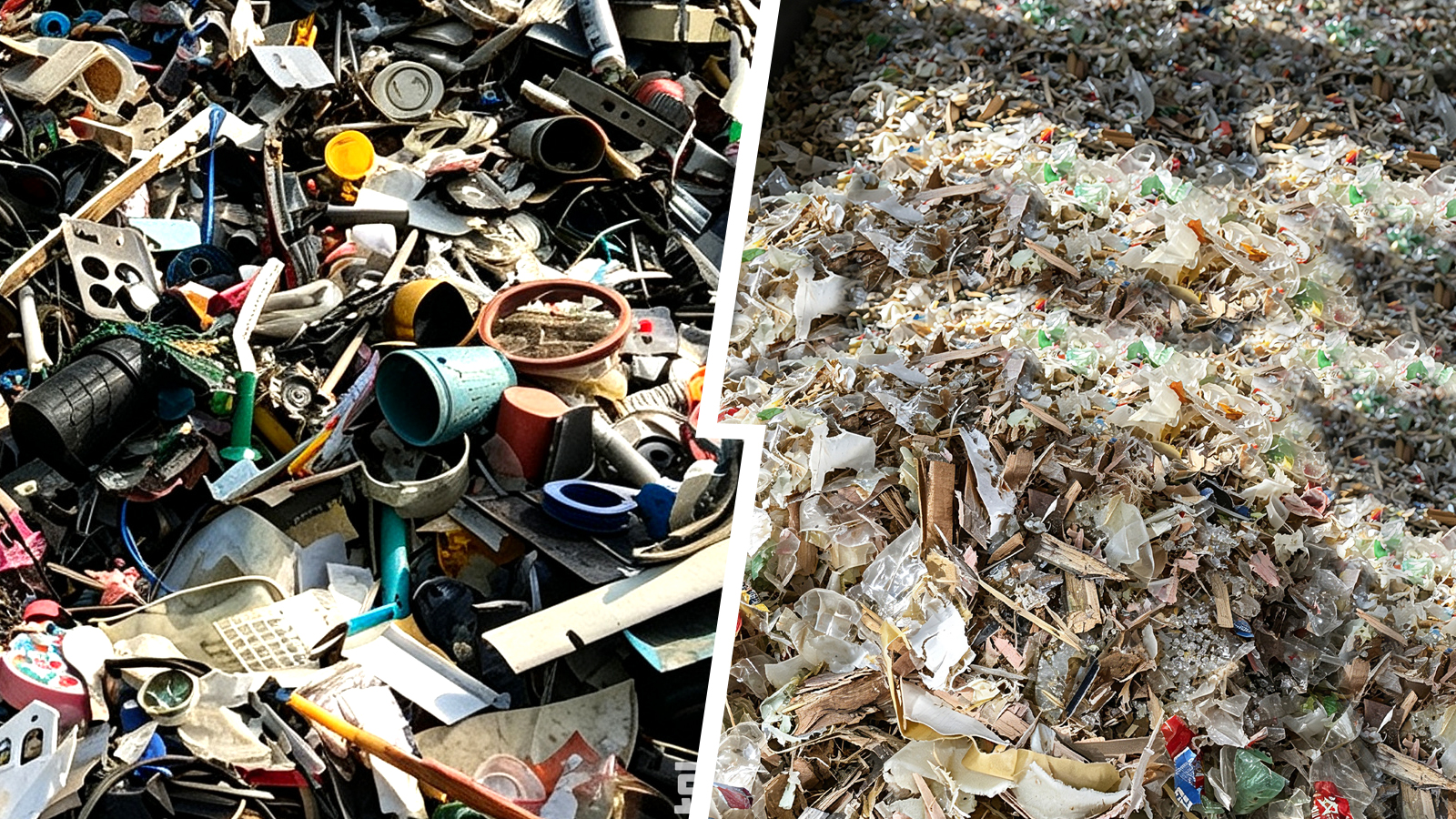
Confirm waste composition, moisture, contaminants and the required sorting or treatment route.
Select a feeding arrangement around the material dimensions, bulk density and required operating duty.
Select the cutting system, drive and operating conditions around the material and processing target.
Transfer the prepared waste to the selected sorting, recovery or treatment stages.
Modular industrial shredding engineered around your material, duty cycle and required output.
View equipment ↗

One-Stop Crushing & Separation Solution
View project details ↗Confirm waste composition, moisture, contaminants and the required sorting or treatment route.
Selection considers material form and composition, required capacity, contamination, operating hours and the downstream result. A material review is needed before confirming a configuration.
Define the size or fraction required by the next process. Cutter geometry, any sizing or separation stages, feeding and material behavior must be considered together.
Send representative material photos, dimensions, hourly capacity, required output, site constraints and destination country.

Include material photos, largest dimensions, hourly capacity, target output size and what happens after shredding.
Discuss this application →