High-Grade RDF / SRF
High-calorific components such as plastics, textiles, and paper are shredded and homogenized into Refuse-Derived Fuel. This alternative fuel is widely used in cement kilns and power plants to replace fossil fuels.
RDF
One-Stop Crushing & Separation Solution
Industrial waste is characterized by its highly variable composition, ranging from plastics, paper, and textiles to leather and rubber. Our industrial waste processing systems are engineered for maximum adaptability and durability. Whether your goal is volume reduction, material recovery, or the production of high-quality Refuse-Derived Fuel (RDF/SRF), we provide a continuous, automated route to transform complex industrial by-products into valuable resources.
High-calorific components such as plastics, textiles, and paper are shredded and homogenized into Refuse-Derived Fuel. This alternative fuel is widely used in cement kilns and power plants to replace fossil fuels.
RDFFerrous and non-ferrous metals are efficiently separated using magnetic and eddy current separators. Clean, high-purity metals are recovered for direct smelting and reuse.
RecyclablesThe remaining heavy and inert materials (such as stones, glass, and sand) are screened out. This clean residue is suitable for safe landfill or can be further processed into construction materials.
ResidueIndustrial waste is loaded into the system via grab cranes or automatic conveyors. The feeding process is precisely controlled to ensure a steady and continuous flow, preventing overload and ensuring smooth operation.
Equipped with wear-resistant cutters, our twin-shaft shredders aggressively reduce complex industrial waste into uniform, manageable pieces. This step effectively liberates mixed materials for downstream separation.
The shredded stream passes through magnetic separators to extract ferrous metals, followed by air classifiers to separate light RDF fluff. Optional eddy current separators can recover non-ferrous metals like aluminum and copper.
The separated high-value fractions are transported to designated storage areas. RDF is stockpiled for fuel use, metals are baled for recycling, and inert residues are collected for safe disposal.
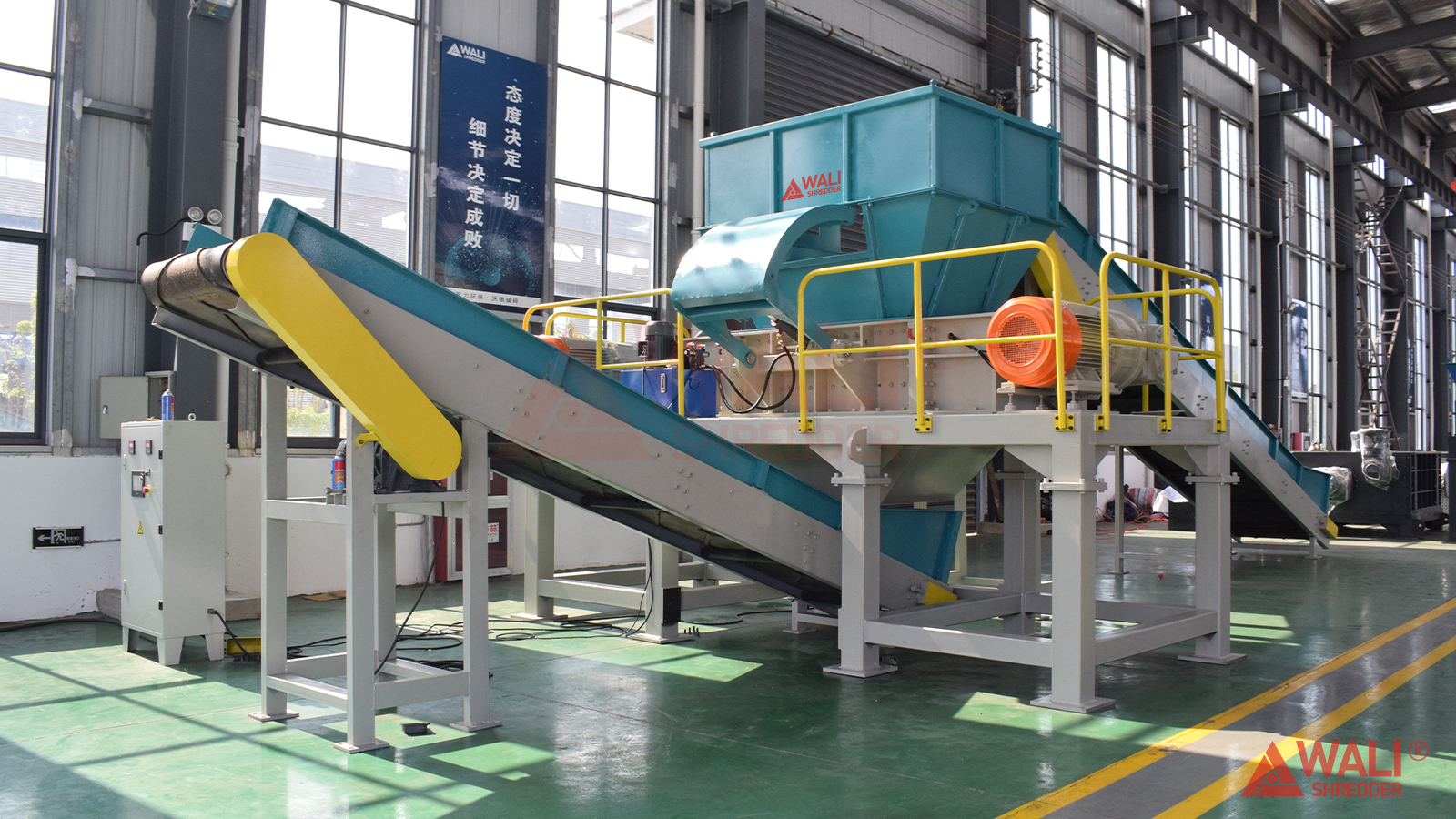
Feeding, shredding, screening, separation and discharge equipment.
Coordinated start-up, load monitoring, protection and interlocks.
Process definition, equipment selection, layout and service access.
Documentation, commissioning guidance, training and spare parts scope.
Capacity, final fractions and supply scope are confirmed for the actual feedstock and downstream process.

One-Stop Crushing & Separation Solution
View project details ↗Confirm waste composition, contamination and whether the project targets material recovery or fuel preparation.
Selection considers material form and composition, required capacity, contamination, operating hours and the downstream result. A material review is needed before confirming a configuration.
Define the size or fraction required by the next process. Cutter geometry, any sizing or separation stages, feeding and material behavior must be considered together.
Send representative material photos, dimensions, hourly capacity, required output, site constraints and destination country.

Our engineers will use the project brief to propose a practical line configuration and the next technical steps.
Plan this system →