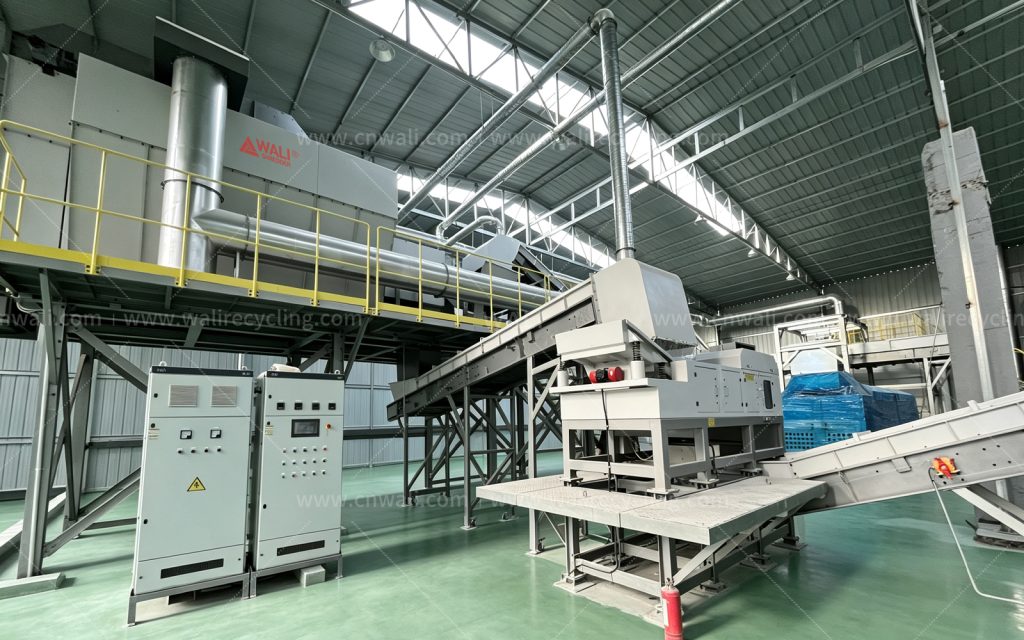
Project Background
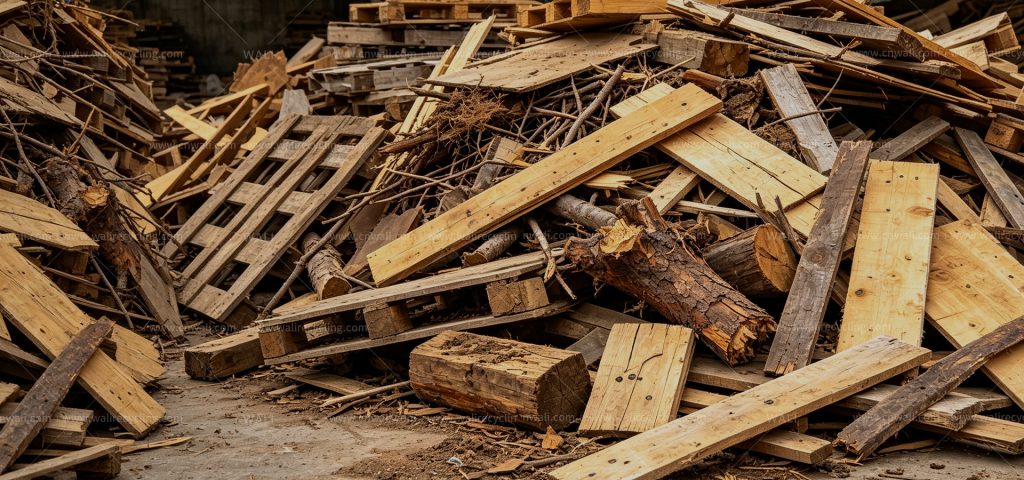
A solid waste disposal company in Xi’an plans to process recovered waste wood into biomass pellets for supply to local power plants and heating companies. The materials mainly include waste construction formwork, discarded wooden pallets, and furniture factory offcuts, among others, with diverse sources and varying forms.
But waste wood sent directly to power plants is not accepted. The reason is simple: the material is too coarse, too contaminated, and unsuitable for combustion in its untreated form.
Biomass fuel has clear requirements for raw materials—particle size must be uniform, impurities must be low, and density must be sufficient. Untreated waste wood meets none of these three conditions.
The customer came to us with a clear goal: to build a production line that can turn waste wood into biomass pellets that meet the required specification.
Material Characteristics and Biomass Pellet Preparation Requirements
To prepare biomass pellets from waste wood, three core issues must be solved:
Particle size control: Biomass pelletizing has strict requirements for raw material particle size, usually requiring crushing to below 3-5 mm. If the particle size is too large, it cannot be pressed into shape; if the particle size is too small, it easily clogs the machine.
Impurity removal: Construction waste formwork often contains nails and screws; demolition wood may be mixed with plastics, sand, and other impurities. If these impurities are not removed, they will not only affect pellet quality but also damage the pellet mill dies.
Densification: Bulk wood chips have low density, high transportation costs, and are inconvenient to feed. After being pressed into shape, biomass pellets have high density and stable calorific value, and are more readily accepted by power plants and heating companies.
Process Solution: A Complete Production Line from Coarse Crushing to Pelletizing
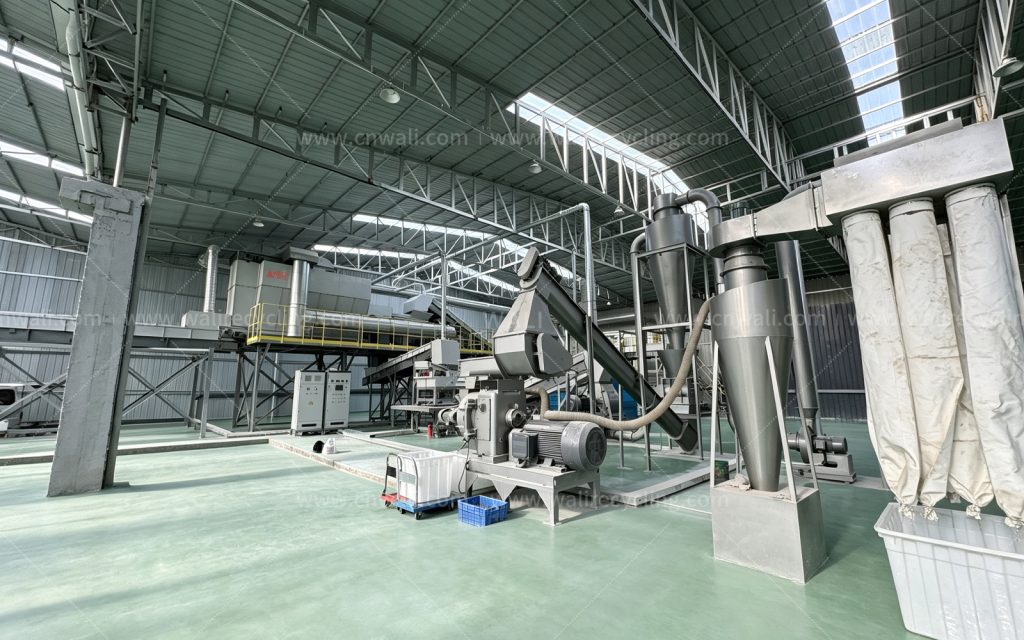
Targeting the customer’s material characteristics and end-user requirements, WALI designed a complete process route of ‘coarse crushing -> iron removal -> fine crushing -> air separation -> eddy current -> fine grinding -> pelletizing -> dust removal.
Step 1: Coarse Crushing—Dual-Shaft Shredder
Waste formwork and wooden pallets are fed directly into the dual-shaft shredder as whole materials, without the need to remove nails in advance or saw them shorter. The dual-shaft shredder has low speed and high torque, relying on ‘tearing’ rather than ‘impact,’ so wood with nails can still be fed in. The output is 100-150 mm block material, uniform and loose, ready for the next step.
Step 2: Iron Removal—Magnetic Separator
The coarsely crushed material passes through a magnetic separator to extract nails, screws, and iron pieces. This step looks simple, but it is especially critical—once iron impurities are removed, wear on downstream crushers and pellet mills is greatly reduced, and there is no need to replace blades and dies frequently.
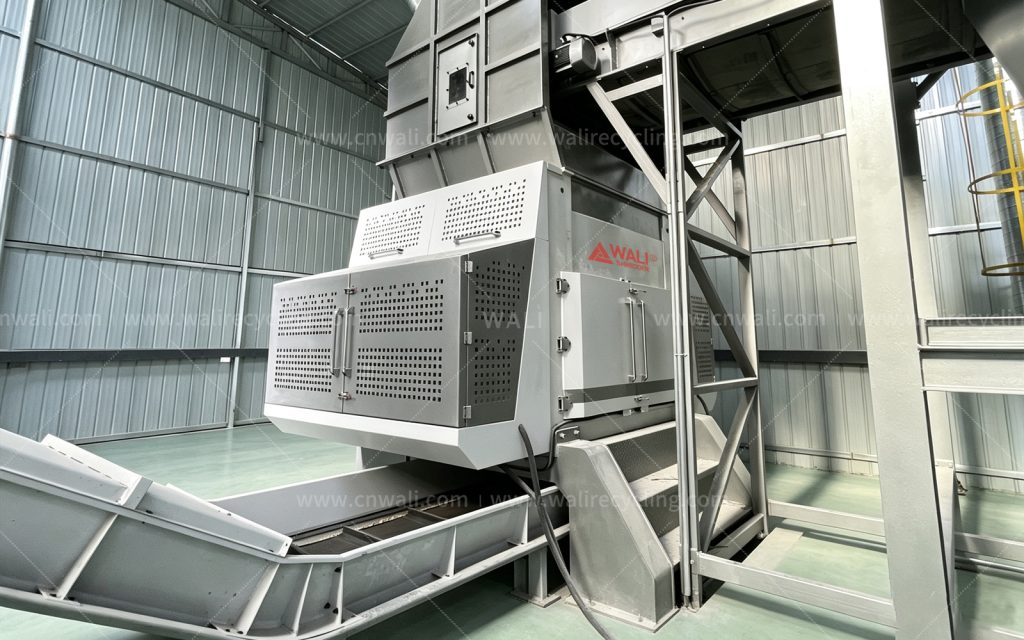
Step 3: Fine Crushing—Single-Shaft Shredder + Screen
The material after iron removal enters the single-shaft shredder, with the bottom screen controlling the discharge. The screen is like a ‘goalkeeper’—only material crushed smaller than the screen holes can pass through; if it is not crushed enough, it continues to be cut inside. According to the requirements of subsequent grinding and pelletizing, the screen aperture can be selected and flexibly adjusted to control discharge particle size.
Step 4: Air Separation—Separating Light Impurities
The finely crushed material enters the air separator. The air separator uses controlled airflow to separate light impurities mixed in the wood (plastic fragments, foam, paper scraps, etc.), further improving raw material purity.
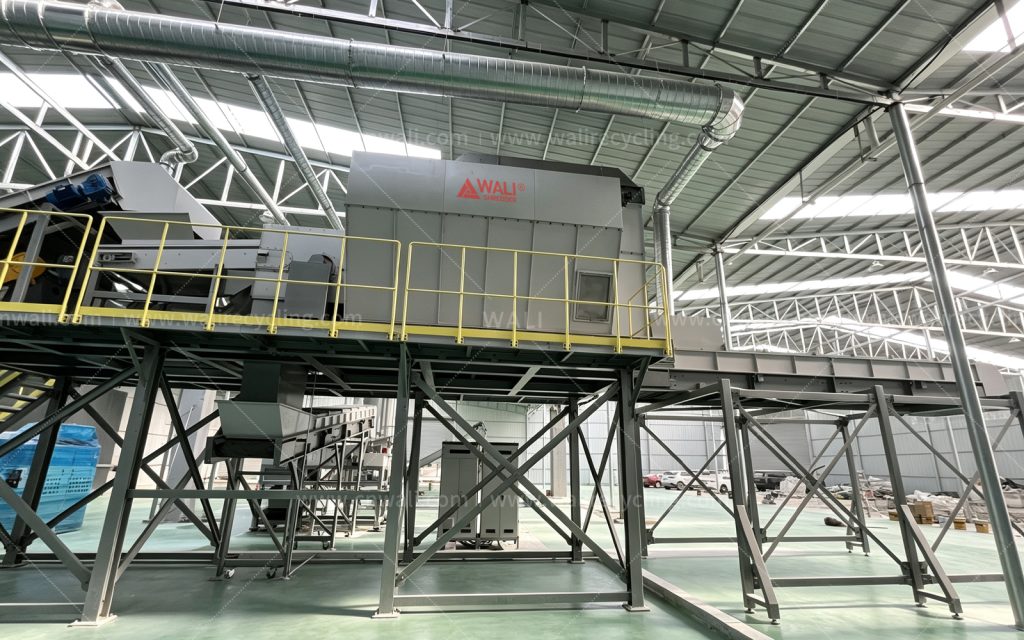
Step 5: Eddy Current—Separating Non-Ferrous Metals
The material after air separation enters the eddy current separator to separate any remaining non-ferrous metals (aluminum, copper, etc.) in the material. Once non-ferrous metals enter the pelletizing stage, they can severely damage the dies. This step serves as the final checkpoint to ensure that the purity of the material entering the pellet mill meets the standard.
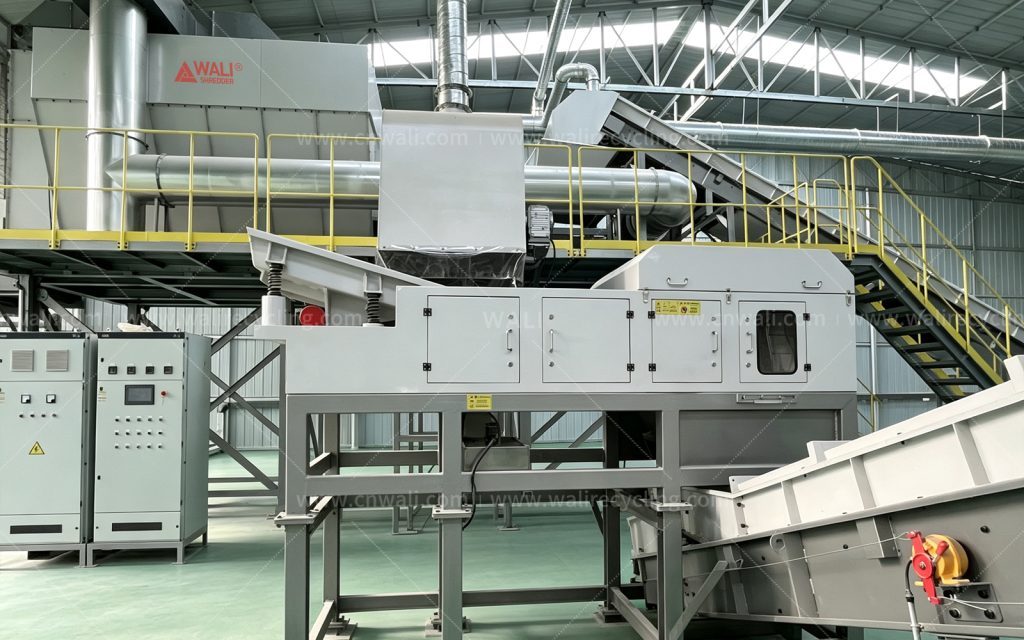
Step 6: Fine Grinding—Preparing Pelletizing Raw Material
The wood material that has undergone the previous separation steps enters the fine grinder and is ground to fine powder below 3-5 mm. This is the last preparation step before pelletizing, and whether the particle size meets the standard directly determines whether it can be pressed into shape later.
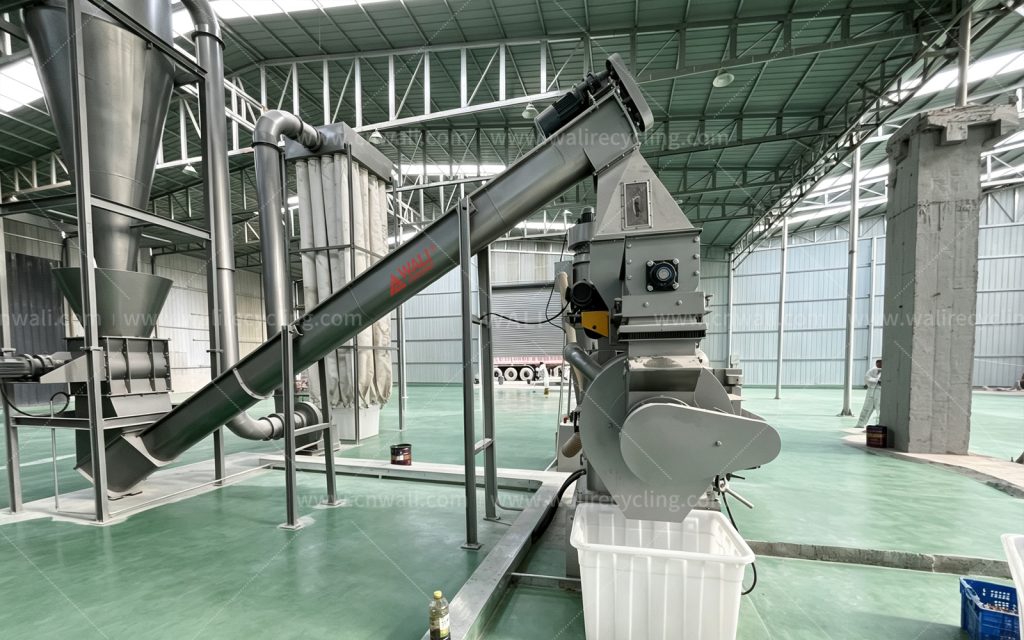
Step 7: Cyclone Collection—Material Collection and Dust Removal
During pneumatic conveying, the ground wood powder is separated and collected from the airflow through a cyclone collector. At the same time, together with the whole-line dust removal equipment, dust generated during production is collected and treated uniformly, improving the workshop operating environment.
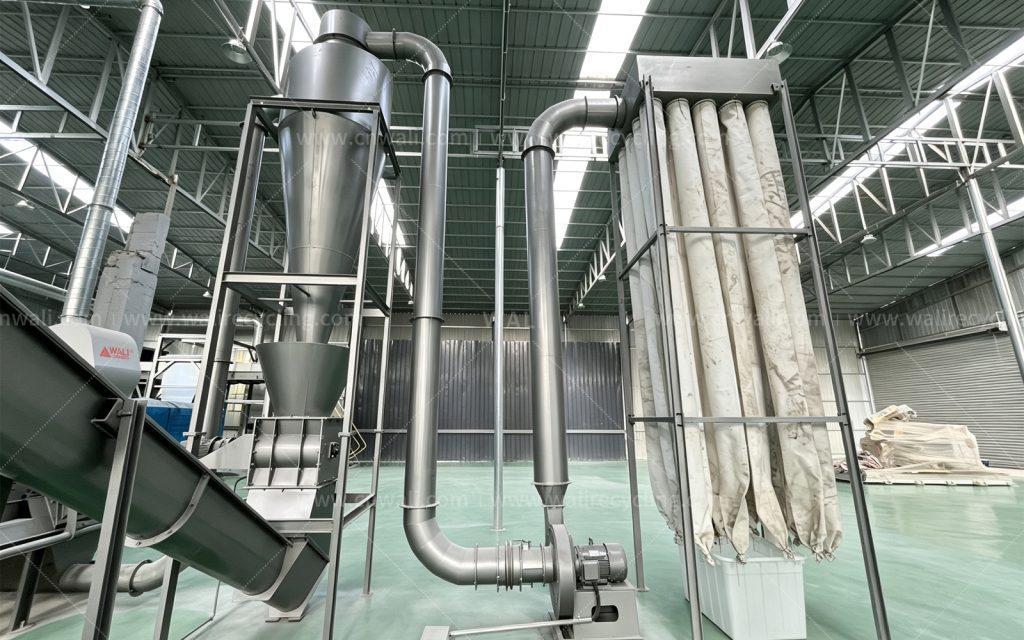
Step 8: Biomass Pelletizing—Press Forming
Finally, the wood powder enters the biomass pellet mill and is pressed under high temperature and high pressure into biomass pellets with high density and stable calorific value. The formed pellets are easy to transport and store, convenient to feed when used by power plants and heating companies, and have higher combustion efficiency.
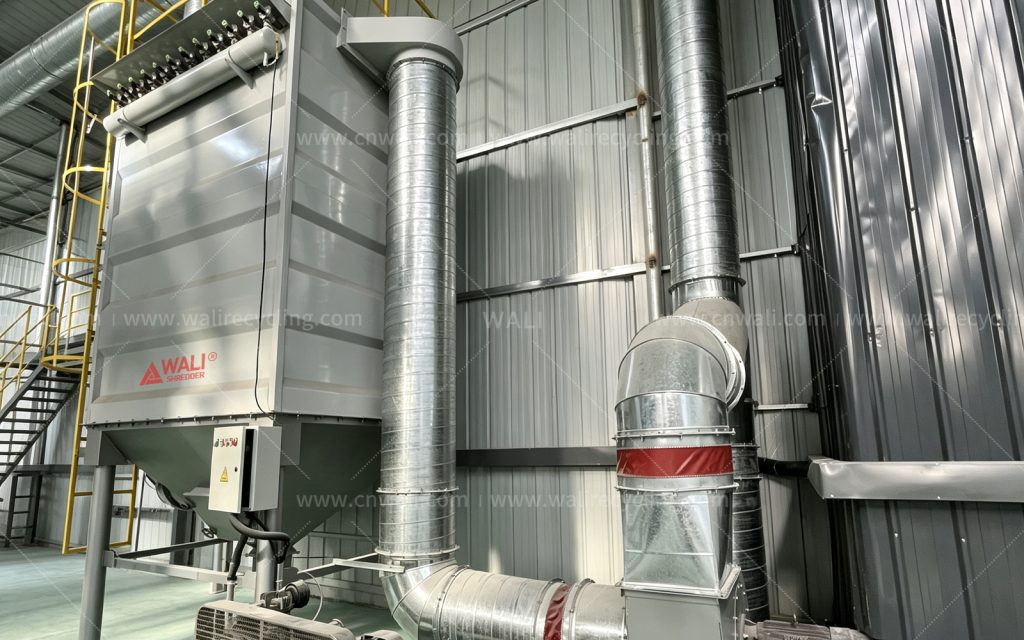
Whole-Line Dust Removal—Running Through the Entire Process
The entire production line is equipped with a dust removal system, with dust collection points set up at each stage of crushing, screening, air separation, grinding, and pelletizing, to collect and treat dust uniformly. This not only improves the workshop environment, but also avoids material loss and safety hazards caused by flying wood powder.
Project Summary
The core of preparing biomass pellets from waste wood lies in controllable particle size, impurity removal, fine grinding, and stable forming.
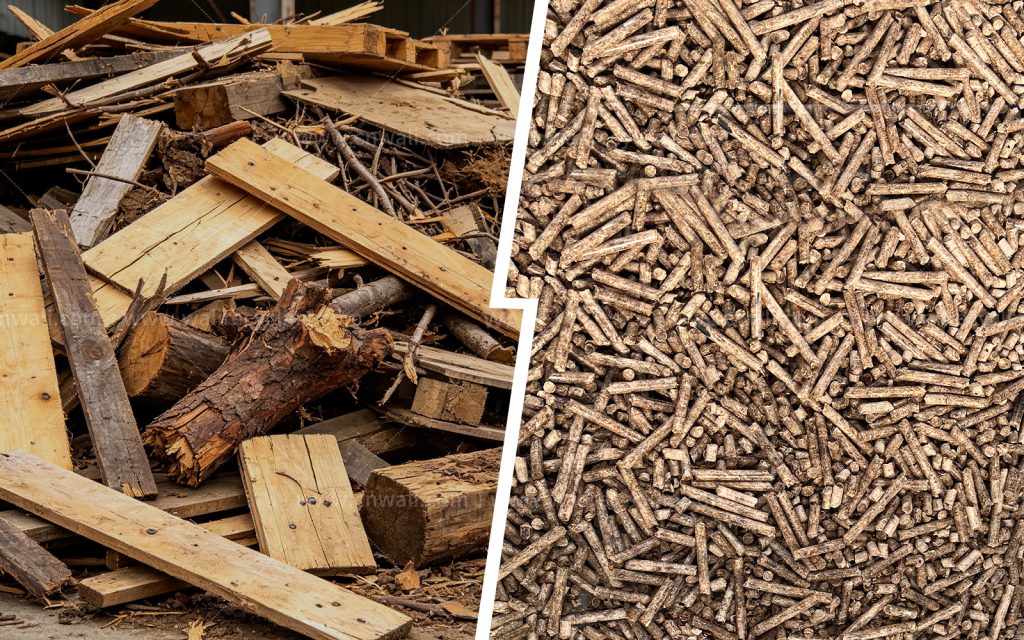
A qualified production line requires close coordination among coarse crushing, iron removal, fine crushing, air separation, eddy current, fine grinding, pelletizing, and dust removal—coarse crushing opens up the material, iron removal protects the equipment, fine crushing controls particle size, air separation purifies quality, eddy current checks non-ferrous metals, fine grinding prepares for pelletizing, pelletizing increases value, and dust removal safeguards the environment.