Uniform Hard Plastic Flakes
Hard plastics such as PET, HDPE, PVC, and ABS are crushed into uniform flakes. The dry crushing process preserves material properties, making the flakes ideal for direct sale or downstream pelletizing.
Hard Plastic
One-Stop Crushing & Separation Solution
Whether you are handling hard plastics like PET bottles and HDPE drums, or soft plastics like PP woven bags and PE films, our dry shredding and crushing systems are engineered for maximum efficiency. Without the need for water or washing lines, our equipment focuses purely on aggressive size reduction and volume minimization. This continuous, automated route helps you significantly reduce storage space, cut transportation costs, and prepare uniform plastic flakes or granules for downstream processing.
Hard plastics such as PET, HDPE, PVC, and ABS are crushed into uniform flakes. The dry crushing process preserves material properties, making the flakes ideal for direct sale or downstream pelletizing.
Hard PlasticSoft plastics like PP woven bags, PE films, and agricultural films are shredded into manageable, high-bulk-density granules. This dramatically reduces volume for efficient storage and transport.
Soft PlasticsMixed or contaminated plastic scrap can be coarsely shredded for volume reduction. This pre-processing step makes handling, storage, and transportation significantly more cost-effective.
MixedPlastic scrap is loaded into the system via conveyor belts or manual feeding. The feeding process is precisely controlled to ensure a steady and continuous flow into the shredder.
Equipped with robust, wear-resistant cutters, our twin-shaft shredders aggressively reduce bulky plastic scrap—such as whole drums or large films—into manageable pieces.
The pre-shredded material is fed into high-speed granulators to achieve the desired final particle size. This step ensures uniform flakes or granules ready for downstream use.
The crushed plastic flakes or granules are discharged via conveyor belts for direct bagging, storage, or transportation.
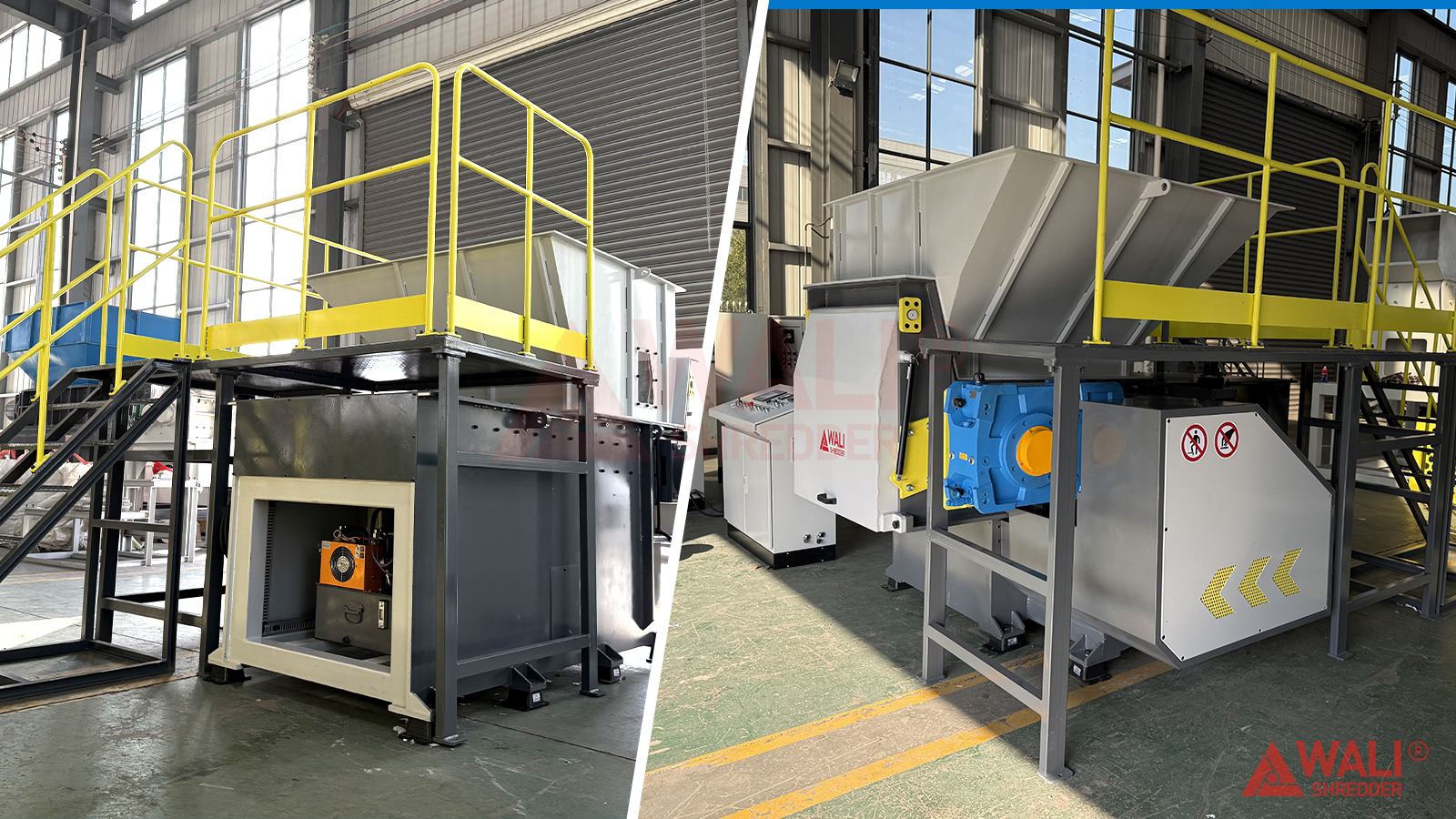
Feeding, shredding, screening, separation and discharge equipment.
Coordinated start-up, load monitoring, protection and interlocks.
Process definition, equipment selection, layout and service access.
Documentation, commissioning guidance, training and spare parts scope.
Capacity, final fractions and supply scope are confirmed for the actual feedstock and downstream process.
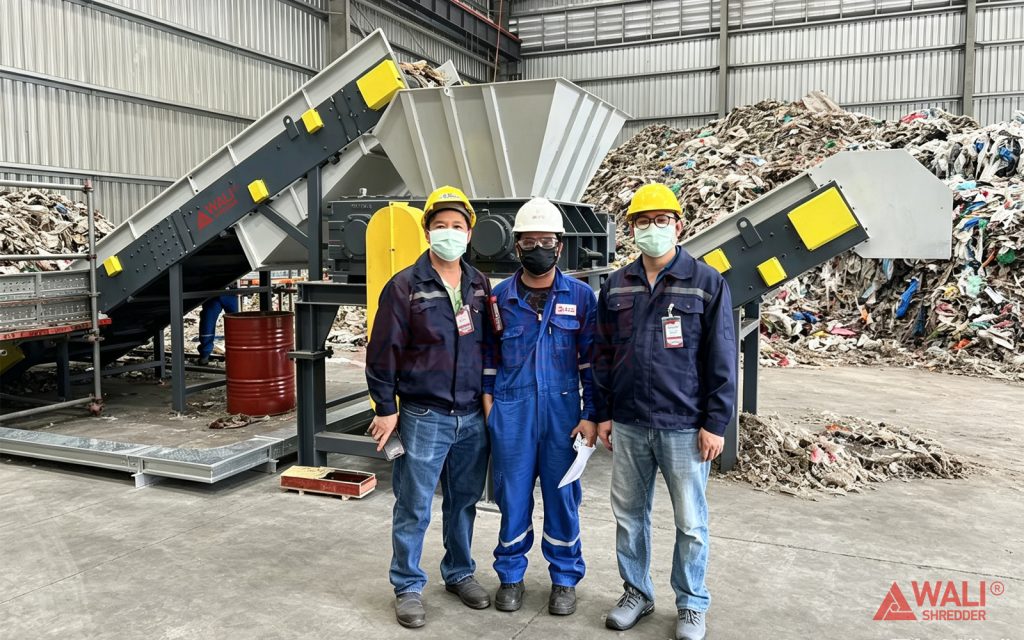
Project Challenge Plastics are ubiquitous—found in food packaging, furniture, toys, and more—making them a defining material of modern society. According to Greenpeace, in 2019, humans generated more than 300 million tons of plastic, yet…
View project details ↗Confirm polymer, material form, contamination and the next recycling process.
Selection considers material form and composition, required capacity, contamination, operating hours and the downstream result. A material review is needed before confirming a configuration.
Define the size or fraction required by the next process. Cutter geometry, any sizing or separation stages, feeding and material behavior must be considered together.
Send representative material photos, dimensions, hourly capacity, required output, site constraints and destination country.

Our engineers will use the project brief to propose a practical line configuration and the next technical steps.
Plan this system →