Four inputs define the starting concept01Feedstock02Hourly capacity03Final fraction04Destination country
Complete-line engineering
Define the final fraction first. Build the line backwards.
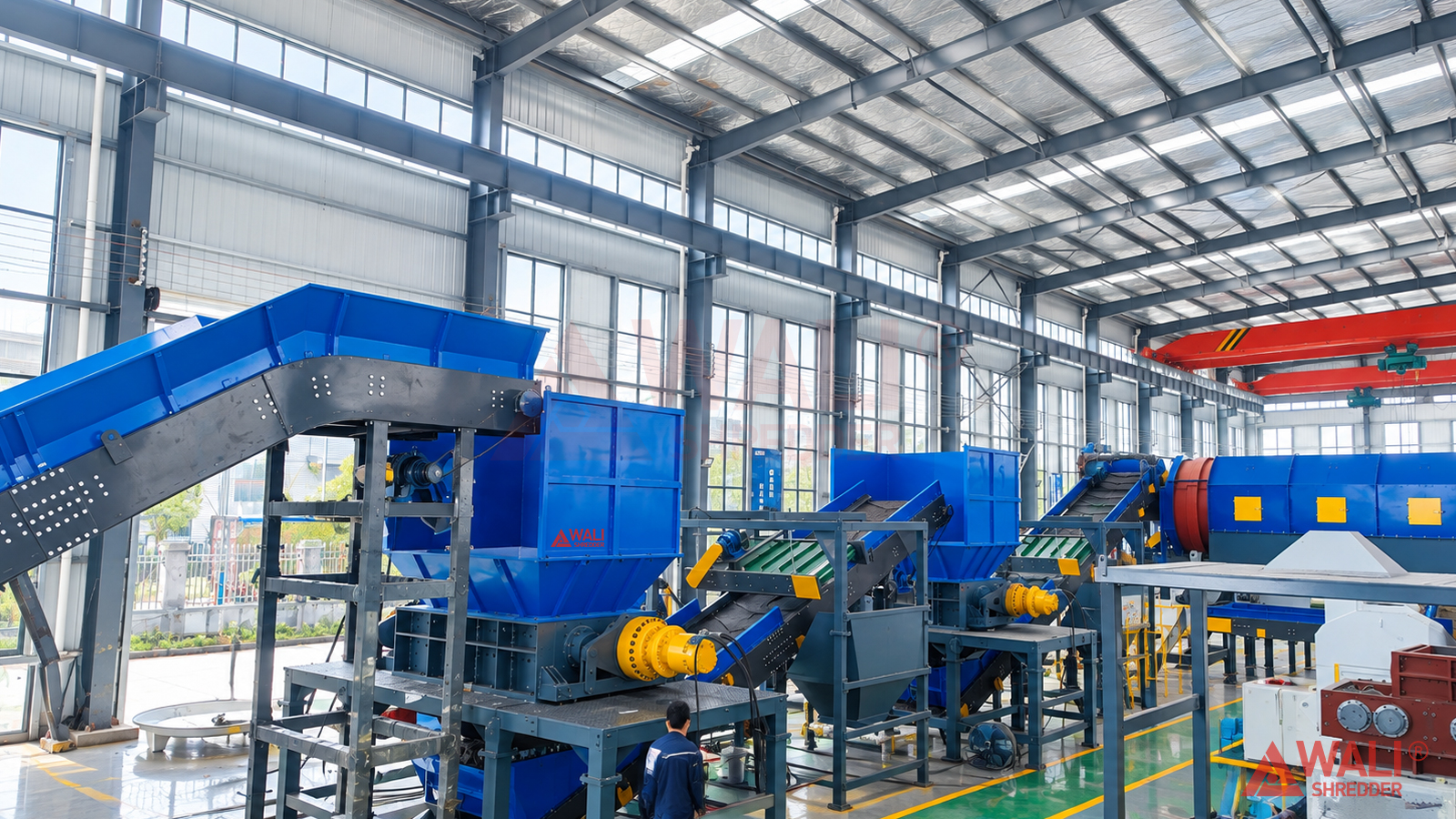
Municipal Solid Waste (MSW) is highly heterogeneous, containing a complex mix of organic matter, plastics, paper, textiles, and inert materials. Our advanced MSW processing systems are designed to handle high volumes and high moisture content. Through a continuous, automated route combining bag opening, shredding, screening, and separation, we maximize landfill diversion, recover recyclables, and produce high-quality Refuse-Derived Fuel (RDF) for clean energy generation.
Choose the required result
The final product changes the complete line.
01
High-Calorific-Value RDF / SRF
High-calorific components such as plastics, paper, and textiles are efficiently separated and shredded into Refuse-Derived Fuel. This alternative fuel significantly reduces reliance on fossil fuels in cement kilns and power plants.
RDF02
Recovered Metals and Rigid Materials
Ferrous and non-ferrous metals (iron, aluminum, copper) are efficiently extracted using magnetic and eddy current separators. Clean, high-purity metals are recovered for direct smelting and reuse.
Recyclables03
Organic Fines & Inert Residue
The remaining organic matter and inert materials (such as sand, glass, and stones) are screened out. The organic fraction can be used for composting or biogas, while inert residues are suitable for safe landfill or brick manufacturing.
Residue
Typical process architecture
One continuous route from municipal solid waste to separated output.
01
Controlled Feeding & Bag Opening
Mixed municipal solid waste is loaded into the system. Specialized bag openers rip open plastic garbage bags, liberating the mixed materials and ensuring uniform distribution for downstream processing.
02
Shredding & Screening
The screened materials pass through magnetic separators to extract ferrous metals, followed by air classifiers to separate lightweight plastics and textiles (RDF). Optional eddy current separators can recover non-ferrous metals like aluminum.
03
Multi-Stage Separation
The screened materials pass through magnetic separators to extract ferrous metals, followed by air classifiers to separate lightweight plastics and textiles (RDF). Optional eddy current separators can recover non-ferrous metals like aluminum.
04
Final Handling & Resource Recovery
The separated high-value fractions are transported to designated storage areas. RDF is stockpiled for fuel use, metals are baled for recycling, and organic residues are collected for composting or safe disposal.
Integrated system scope
More than a collection of machines.
Mechanical
Feeding, shredding, screening, separation and discharge equipment.
Controls
Coordinated start-up, load monitoring, protection and interlocks.
Engineering
Process definition, equipment selection, layout and service access.
Support
Documentation, commissioning guidance, training and spare parts scope.
Define the project brief
Targets that guide the engineering.
Capacity, final fractions and supply scope are confirmed for the actual feedstock and downstream process.
What should I confirm about Municipal solid waste?
Confirm waste composition, moisture, contaminants and the required sorting or treatment route.
How is the equipment or process selected?
Selection considers material form and composition, required capacity, contamination, operating hours and the downstream result. A material review is needed before confirming a configuration.
Can the final output be specified?
Define the size or fraction required by the next process. Cutter geometry, any sizing or separation stages, feeding and material behavior must be considered together.
What information should I send first?
Send representative material photos, dimensions, hourly capacity, required output, site constraints and destination country.
Build the right process
Tell us your material, capacity and required final product.
Our engineers will use the project brief to propose a practical line configuration and the next technical steps.
We use necessary technologies to operate forms and remember your privacy choice. Optional analytics and marketing technologies are used only if you accept them.