
Project Challenge
- Waste textile fabrics are bulky and fluffy, which can easily cause uneven feeding.
- RDF/SRF has strict particle size requirements (typically 30–100 mm, depending on the boiler type).
Process Configuration
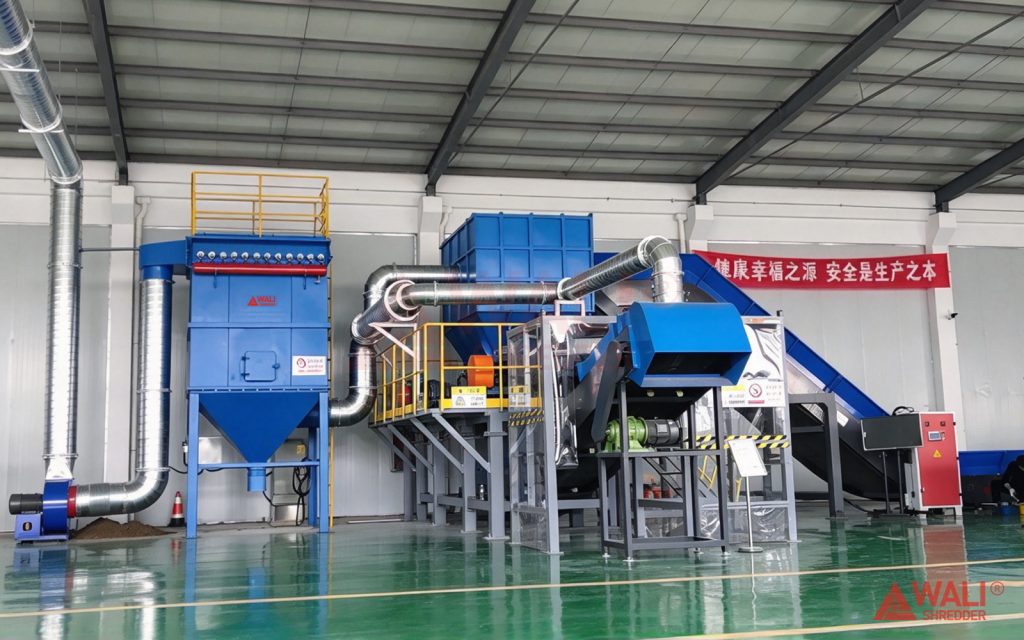
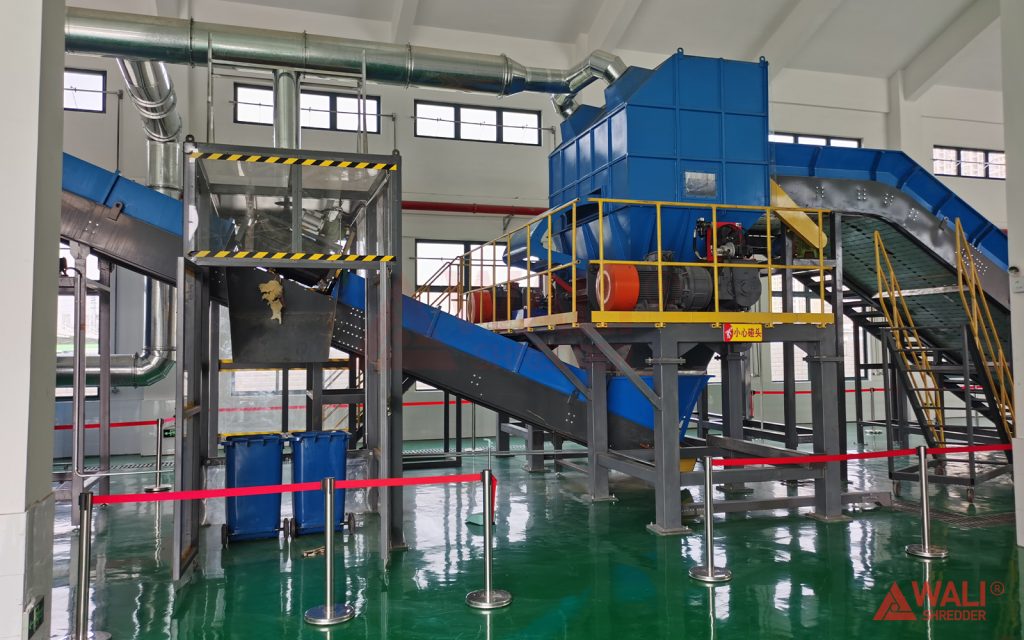
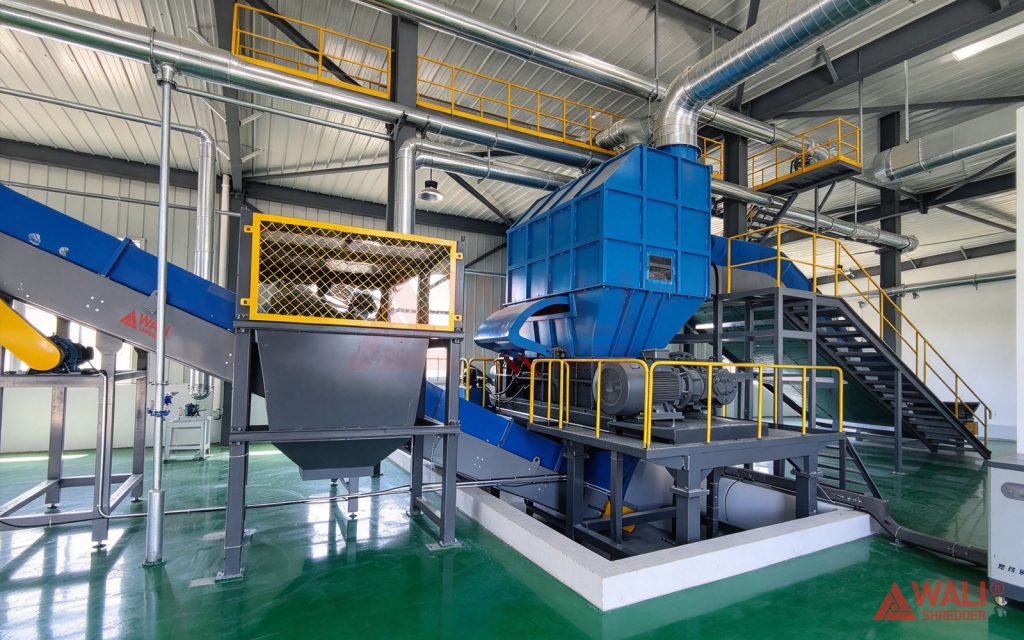
Textile materials undergo secondary shredding via the dual-shaft and single-shaft shredders, followed by ferrous metal separation through the magnetic separator, resulting in pure fabric fragments
Output
Metals (e.g., zippers, buttons, screws)
Light plastics
SRF
Customer Outcome
The system primarily shreds high-calorific-value industrial waste such as fabrics and plastics, enabling more precise subsequent sorting and laying the foundation for producing SRF alternative fuels or RDF fuel pellets